
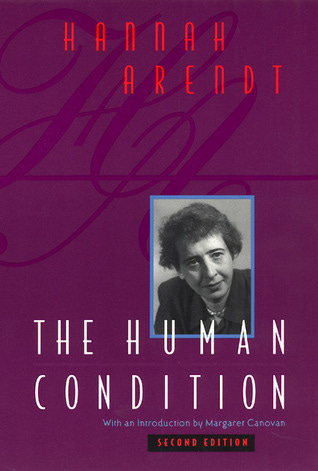
In 1958, Hannah Arendt categorized human activity into three types: labor, work, and action. Those three interacted with each other differently throughout history.
She starts by situating them in ancient Greek frameworks. She noted that in Athens, labor was confined to the household (the oikos) and represented biological maintenance, the repetitive tasks of staying alive that produce nothing lasting. Work, by contrast, involves creating durable objects (buildings, furniture, tools), things that outlast their makers. It sat somewhere between oikos and polis.
The polis is the public realm, and it contains Action. Action meant appearing before other people, in public, as yourself, part of a network, in a situation where their response has consequences you can’t anticipate or control. An example she gives is Socrates, who spent his life stopping strangers in the marketplace to question what they believed, never knowing where the conversation would go, being genuinely changed by it, until the day it killed him.
The Greeks kept these separate. Economic life, labor, and work stayed inside the oikos. It was private by design. You handled the necessity behind walls so you could freely enter the polis where Action happened. Action was vital to Hannah Arendt. Animals labor and machines work, but she believed Action was very human and our only way to achieve true freedom, and express our unique identities.
Arendt traces several shifts before we arrive at the 16th century and the emergence of the nation-state. It treats the entire nation as a single household to be managed. The king was, in effect, the household head writ large. Even when monarchies fell, the government’s job is what the household head’s job used to be: feeding people, managing resources, keeping the organism alive. Economics is literally “household law”. Production, consumption, and survival crowded out everything else. Eventually, managing necessity became public life.
Arendt calls this “the social realm”. Managing necessity requires predictable, conformist, measurable behavior. Behavior replaced Action.
Arendt’s historical narrative stops here. So I want to pick it up. I believe that Action, as she defines it, made a comeback. When Arendt was writing the book, corporations were rigid hierarchies designed for predictability. Work was behavior by definition. But starting in the 1970s, work changed. Stable employment gave way to flexibility and individual judgment. The modern knowledge worker is given the freedom to solve problems without predetermined answers, in teams where the outcome depends on what each person actually thinks. And where views differ, you have to defend your position or change your mind. That’s not the polis. But it shares something with it: a genuine encounter between people exposed to each other, with shared stakes and no way to walk away. Work accidentally kept Action alive.
Ok, now let’s come back to the one-person company. Because I’m still trying to understand why I’m uncomfortable with it. The one-person company removes the last accidental site where Action happened. So we will end up rich in products, but poor in Action.
A solo company has no intellectual friction, no Action. One person, making money, alone. If these are isolated cases, it wouldn’t matter. But if everyone becomes a solo worker, there’s nothing between people anymore. The social realm and the traditional company, for all its flaws, at least put people in a room. It had other people in it, even if they were only behaving. The one-person company removes even that. Each person manages their own necessity, alone, connected to others only through transactions and consumption.
That’s the pessimistic scenario. But there may be another: if the solo entrepreneur handles necessity efficiently (or some UBI emerges), then economic life is mastered. And we have the desire to appear before others, and the courage to do it, to cross the threshold into genuine Action.