

Many people are migrating to Substack, searching for an intentional digital existence. Yet, I believe these same individuals are also looking to decenter the digital in their lives. We don’t want our careers or cultural experiences confined solely to a screen. I see an opportunity here to figure out a healthy balance of what belongs on a screen and what belongs in the world.
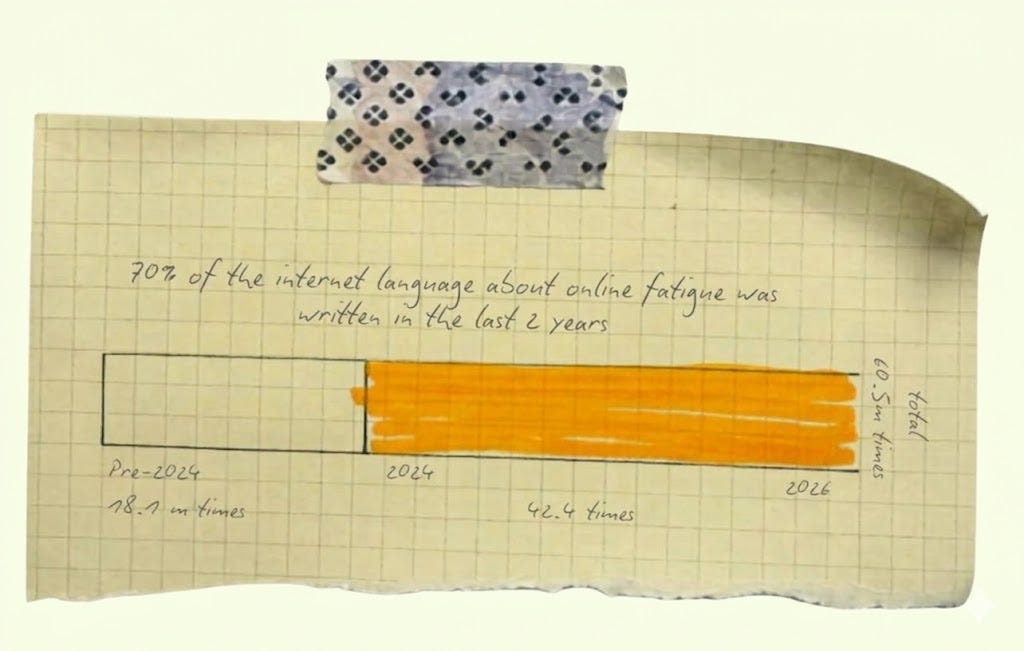
“I am nostalgic for a time when I was present, when my generation was between 5 and 10, when we were still doing things in the real world,” shared 19-year-old Nancy, a university student in London, “I don’t remember what I watched yesterday on TikTok, but I remember what I did years ago when I didn’t have a phone.”
Substack’s CEO has noted that other platforms don’t have creators’ best interests at heart (no ownership of your audience, no way to make real money doing the work you believe in). That diagnosis is about the digital world, and I believe Substack is addressing it successfully. But offline institutions have their own versions of the same misalignment.
Substack is a natural place to correct that because its creators are already producing culture in online and offline forms.
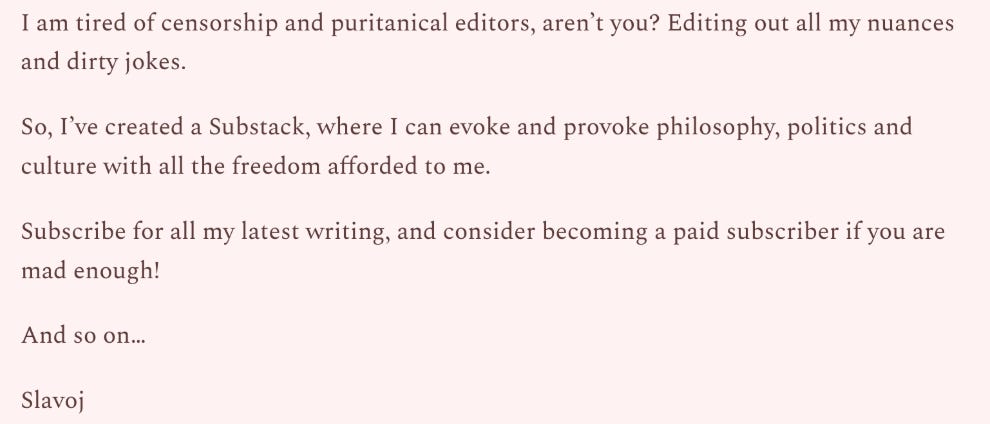
Writers whose reputations were built in mainstream media, publishing, literary journalism, and the university system keep newsletters here. These are not obligatory presences that most authors treat as a tax on real work. But as an extension of their intellectual work, they engage with their readers and maintain freedom over the content. These are just four examples, but there are many: George Saunders, Slavoj Žižek, Suleika Jaouad, Maggie Smith
The traffic runs the other way, too, and this may be more consequential. Digitally native writers who built their audiences entirely on the platform are being picked up by traditional publishers who now treat Substack the way editors once treated literary magazines: as a place to surface talent. For example:
Nicole Kelner had 4,000 subscribers when she published a post about the quietest places in New York. A reader who had worked in publishing forwarded it to an editor at Rizzoli. The post became a book.
Naomi Kanakia published her novella Money Matters in full on her Substack. Peter C. Baker profiled it in The New Yorker as the best new fiction he’d read that year. Random House offered her a deal.
Ethan Mollick was already a Wharton professor when he started One Useful Thing, his newsletter on AI. But when Portfolio published Co-Intelligence in 2024, the cover didn’t lead with Wharton. It led with Substack. “From the author of the popular One Useful Thing Substack newsletter” is how Penguin Random House introduced the book to the market.
Caroline Chambers was rejected by every publisher when she pitched a cookbook. She turned the concept into a Substack, grew it to half a million subscribers, and when the cookbook finally came out, it was an instant New York Times bestseller.
This porosity creates healthy dynamics for Substack. Each online-offline crossing solves a business problem. Distribution, monetization, professional credibility, and subscriber acquisition. They are the things most independent creators spend half their working hours chasing, usually alone.
For example, Lena Dunham just ran what amounted to a Substack press tour for her memoir. Night of Desire, a reading series in a Wall Street bathhouse, sold out in minutes and left a three-hundred-person waitlist before expanding to Los Angeles. Martha Stewart led a pie competition with Substack creators. A limited-edition I-D zine collaboration sold out. The appetite for free-range Substackers is real.
These seem to be on-off initiatives by Substack. But on average, when a post wants to become a physical thing: a book, a talk, a screening, a gathering, a course, it leaves the Substack platform. And with it leaves a residual economic and cultural value. The institution that gives it that real-world form captures most of that value away from the creators (often offering bad economics), and then away from Substack. Substack currently functions like a minor league that develops talent, proves demand, and then watches as other institutions sign the players.
Substack’s recent push into video, the TV app, and podcast suggests an effort to keep more of the creator’s output, and the value it generates, inside the platform. This approach has proven beneficial. However, digital channels are getting increasingly saturated. So the question is whether it extends past the screen.
It feels like Substack folks are way more “my people” than on any other app, or on the stage of a talk show or in the pages of a magazine. — Lena Dunham
Is there room for a Substack Offline, Substack Institute, or Substack in the Wild, or whatever it ends up being called, to institutionalize under one umbrella some of the efforts I mentioned above?
I would love to help implement some of that and build more partnerships with the physical world. Below are a few examples of concepts I would explore, acknowledging that these are ideas that require validation, before they could scale up:
A quarterly print magazine. A mix of emerging and established writers, curated each issue around a theme. Pre-ordered by subscribers, funded before it prints. Contributors receive a revenue share, and each issue includes a code for a free month of a featured writer’s paid newsletter, turning the magazine into a subscriber acquisition tool for every writer in it. A small number of print ads from aligned brands is one of the few formats where Substack’s audience would tolerate advertising.
Workshops and lectures. Led by creators, co-hosted with universities or cultural institutions where many of them already work. Draw with a New Yorker cartoonist. Edit your own memoir with Suleika Jaouad. Learn investigative reporting with the Dropsite team. Cook through a seasonal menu with Caroline Chambers. At a modest fee through a Substack ticketing system that keeps the platform in the payments flow.
Substack Press. A co-publishing model where Substack partners with a creator to produce and distribute a book. The key difference from traditional publishing: production only begins after a minimum number of pre-orders are confirmed by the creator’s subscriber base, confirming demand and compressing risk before a dollar is spent on printing. The creator gets a revenue split significantly better than the typical 10–15% royalty.
Festival stages. Rather than building a festival from scratch, Substack sponsors panels of its creators at existing literary and cultural festivals. Cheaper to run and puts writers in front of audiences who aren’t on the platform yet.
Printing magazines and running events will not carry software margins. The offline programming is a moat and brand investment. While profitability isn’t essential, costs must remain lower than the value generated. The goal is to drive growth and retention within Substack’s core revenue model. Subscribers who purchase the magazine or attend a workshop are less likely to churn compared to those who only engage with emails.
***
I would love more feedback on this idea. I suspect someone inside Substack has been making a version of this. I’d love to talk to them.
I’d also like to hear from creators. What do they want? And if they have already extended their Substack into a real-world form, find out how they did it, what Substack helped with, what they had to figure out on their own, and who they partnered with on the other end.
Please get in touch! Comment below or DM me.